How to Talk About Brain Health (Without Science-Speak)
Simple ways to help members / residents / students understand the cognitive benefits of movement
Brain health is becoming a bigger part of the wellness conversation — and for good reason. People want to stay sharp, independent, and confident as they age.
But for many facilities, the challenge isn’t whether brain health matters. It’s how to talk about it in a way that feels clear, natural, and relevant to members.
The good news is, you don’t need complex explanations or scientific terminology to make brain health meaningful. In fact, the simplest approach is often the most effective.
Start With What People Already Care About
Most members aren’t thinking in terms of “cognitive function” or “neuroplasticity.” They’re thinking about everyday life.
They want to:
Stay mentally sharp
React quickly and confidently
Maintain independence
Feel engaged and energized
Enjoy their workouts
When you connect movement to these real-life benefits, brain health becomes immediately understandable.
Instead of saying:
“This improves cognitive performance.”
Try saying:
“This helps keep your mind sharp while you stay active.”
It’s the same idea — just in language people connect with.
Focus on the Experience, Not the Explanation
Members don’t need to understand the science behind brain health to benefit from it. What matters most is the experience.
When someone is steering, reacting, making decisions, and adjusting while they cycle on our bikes, they’re naturally engaging their brain. This mirrors how the brain works in everyday life.
A simple comment like: “You’re working your mind and body at the same time here.” is often enough to help members recognize the added value.
Reframe Engagement as a Benefit
One of the most powerful drivers of brain health is engagement — being present, focused, and involved in the activity. When workouts are interactive and enjoyable, people tend to:
Stay focused longer
Return more consistently
Challenge themselves in new ways
Enjoyment isn’t a distraction from wellness. It’s part of what makes it sustainable. You might say: “When you’re engaged and having fun, your brain stays active too.”
This helps members see the connection without overcomplicating it.
You Don’t Need to Create New Programs
Supporting brain health doesn’t require new classes or major changes to your facility. It often means recognizing and reinforcing what’s already happening.
Activities that involve:
Decision-making
Coordination
Reaction
Navigation
Goal-setting
naturally engage the brain.
By simply highlighting these moments, you help members recognize the full value of their experience — and how cardiogaming engages both the mind and body.
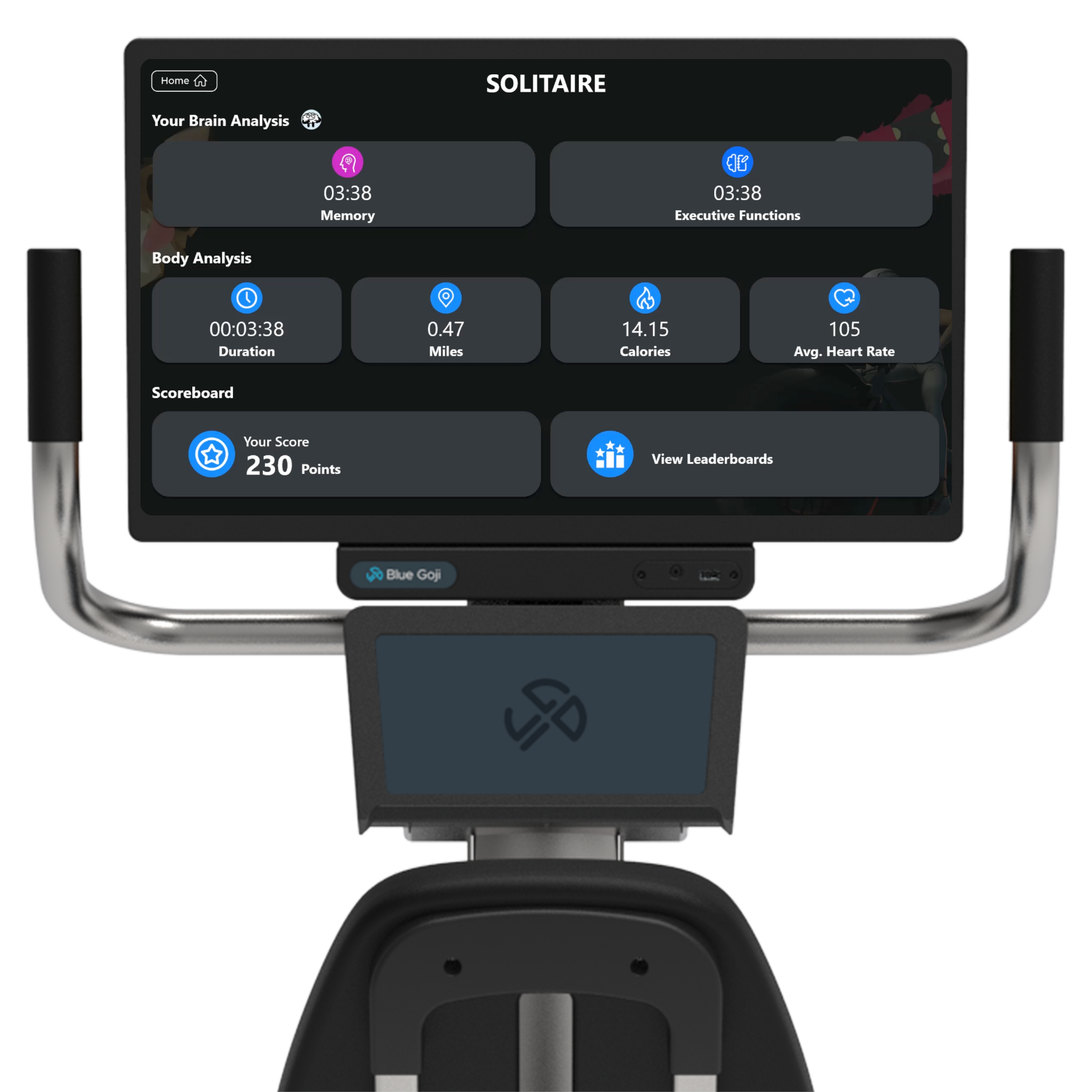
Blue Goji bikes also reinforce this connection automatically. After each session, riders receive a training summary that goes beyond traditional metrics like calories, distance, and time. It also highlights their Brain Skills Time, showing how long they engaged key cognitive abilities such as attention, reaction, and coordination throughout the game.
This helps make brain health visible and tangible, allowing members to see that they’re not just exercising their bodies — they’re actively engaging their minds as well.
Help Staff Use Natural, Everyday Language
Staff play an important role in shaping how members perceive their workouts. Encourage your team to use simple, conversational phrases like:
For general members: “This helps keep your brain engaged.” or “This bike challenges your mind and body together.”
For Athletes: “You’re building coordination and focus which benefits body and brain performance.”
For students: “This is great for waking up the brain to get in the right mindset before a test.”
For those concerned with active aging: “It’s great for staying sharp.”
These statements are easy to remember and feel authentic in conversation. Staff don’t need to lecture or explain. A quick, supportive comment can make a lasting impression.
The Bigger Picture: Brain Health Is Part of Whole-Person Health
Brain health isn’t separate from physical health — it’s connected to how we move, think, and engage with the world. When members feel challenged, engaged, and motivated, they’re supporting both their physical and cognitive well-being.
By keeping the conversation simple and focusing on real-life benefits, you make brain health approachable — and help members feel confident in the value of their activity.It’s not about adding complexity. It’s about helping people recognize that when they move with intention and engagement, they’re supporting their whole self.
At Blue Goji, we believe in supporting embodied health — where physical, cognitive, social, and emotional well-being work together. And often, it starts with something as simple as helping members see the full value of their movement.
Track Your Brain Skills and See Your Progress
One of the most powerful ways to reinforce brain health is to make it visible.
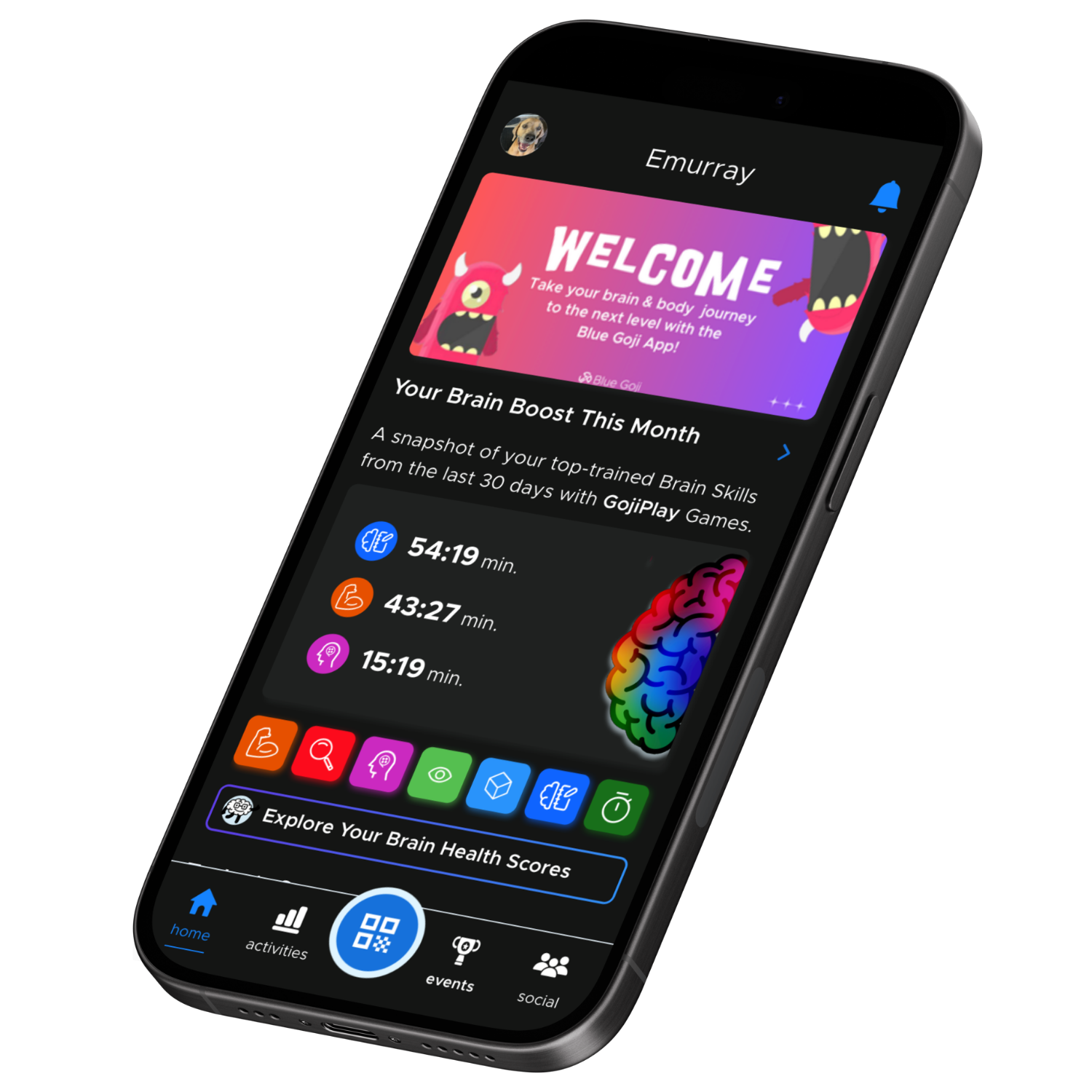
With the Blue Goji app, riders can track their Brain Skills Time alongside their physical activity — helping them see how each session supports both body and mind. The app provides a clear view of training history, progress, and performance across different brain skills, making it easy to recognize improvements over time.
This visibility helps transform brain health from an abstract concept into something members can see, understand, and stay motivated by.
Download the Blue Goji app to explore your training summary, track your Brain Skills Time, and follow your progress.