Why Thinking While Moving Matters for Brain Health
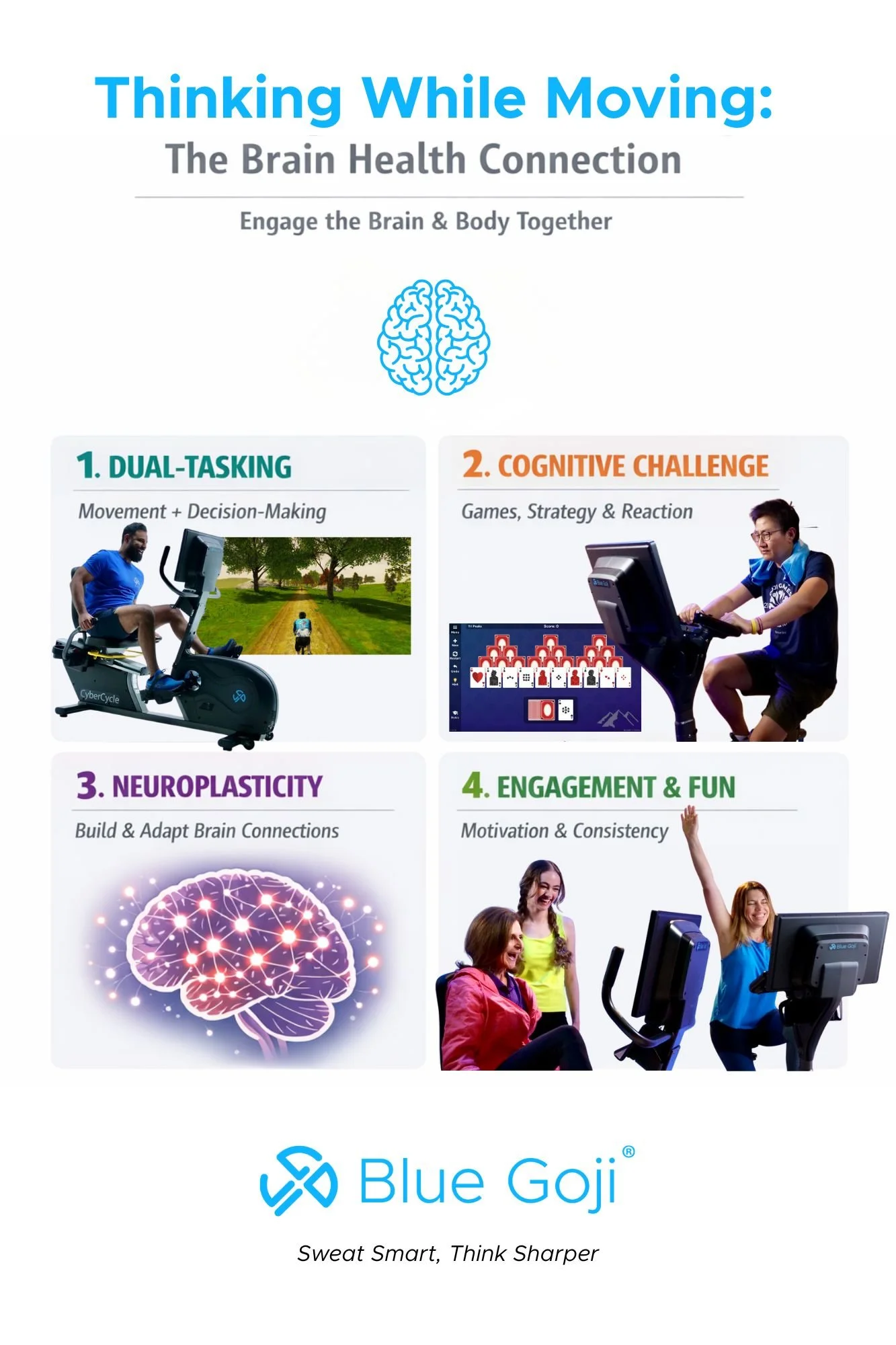
For years, brain health and physical fitness have lived in separate worlds.
One focused on movement, strength, and endurance.
The other focused on puzzles, apps, and sitting still.
But emerging research — and real-world experience — is showing that this separation doesn’t reflect how the brain actually works. The brain isn’t designed to be trained in isolation. It’s designed to adapt through the body.
That’s where thinking while moving comes in.
What “Dual-Tasking” Really Means (In Plain English)
Dual-tasking simply means engaging the brain and body at the same time.
It’s not about multitasking for the sake of it. It’s about combining:
movement
decision-making
attention
reaction
coordination
Think about everyday life:
walking through a busy space
reacting to people or obstacles
making quick choices
adjusting your pace or direction
These moments require the brain and body to work together continuously. When fitness experiences reflect this reality, they place meaningful — and beneficial — demands on the brain.
Why Games Work Better Than Drills
Traditional “brain training” often relies on repetition and isolated tasks. While these can be helpful in certain contexts, they don’t always translate well to real-life function.
Games, on the other hand, naturally introduce:
novelty
problem-solving
feedback
challenge
motivation
When someone is navigating a game, responding to visual cues, making decisions, and moving their body all at once, they’re engaging multiple brain systems simultaneously.
And importantly — they’re more likely to stay engaged longer.
Enjoyment isn’t a distraction from brain health. It’s one of the reasons it works.
How Movement Accelerates Neuroplasticity
Neuroplasticity refers to the brain’s ability to adapt, reorganize, and form new connections. This ability doesn’t stop at a certain age — it continues throughout life.
Movement plays a powerful role in this process.
Physical activity increases blood flow to the brain, supports the release of neurochemicals associated with learning, and creates an environment where the brain is more receptive to change.
When movement is paired with cognitive challenge, the brain isn’t just activated — it’s challenged to adapt.
This combination is especially important for:
maintaining cognitive resilience
supporting attention and executive function
reinforcing brain-body coordination
What This Looks Like in Real Fitness Spaces
Supporting brain health doesn’t require specialized labs or clinical settings.
In fitness environments, it can look like:
interactive experiences that require focus and reaction
activities that combine coordination with decision-making
short bouts that encourage consistency rather than fatigue
social or multiplayer elements that add motivation and connection
The goal isn’t to overwhelm users — it’s to engage them in ways that feel intuitive, meaningful, and repeatable.
Where Blue Goji Fits In
At Blue Goji, we design experiences around embodied health — the idea that physical, cognitive, emotional, and social health are deeply connected.
When riders steer, react, plan, and move at the same time, they’re naturally engaging in dual-tasking. When they play games, compete with others, or pursue goals together, they’re reinforcing engagement and consistency.
This isn’t about turning fitness into “brain training.”
It’s about recognizing that the brain is already part of every movement experience — and designing with that reality in mind.